
Random Chat, Legal Issues Regarding Minors and the Structural Safety of diptok
Understanding Legal Boundaries and How Design Minimizes Risk

Hello, I'm Ji-Hoon Kim, sharing data-driven insights. In a Korean random chat environment, sexual contact with minors or any situation leading to it must never occur under any circumstances. However, it is important to note that random chat itself is not illegal; the problem arises when the service is used indiscriminately without a clear understanding of when and under what conditions legal liability is triggered.
The purpose of this article is to provide an informative guide for users and interested parties, summarizing legal standards and structural risk factors centered on the protection of minors, and providing criteria for safer random chat usage.
In this post, I will cover:
- Whether chatting with a minor is illegal in itself.
- The legal standards for what constitutes an offense.
- How diptok structurally addresses these issues.
This summary is based on official statutes and Korean legal commentaries.
1. Is the Act of Chatting with a Minor Illegal?
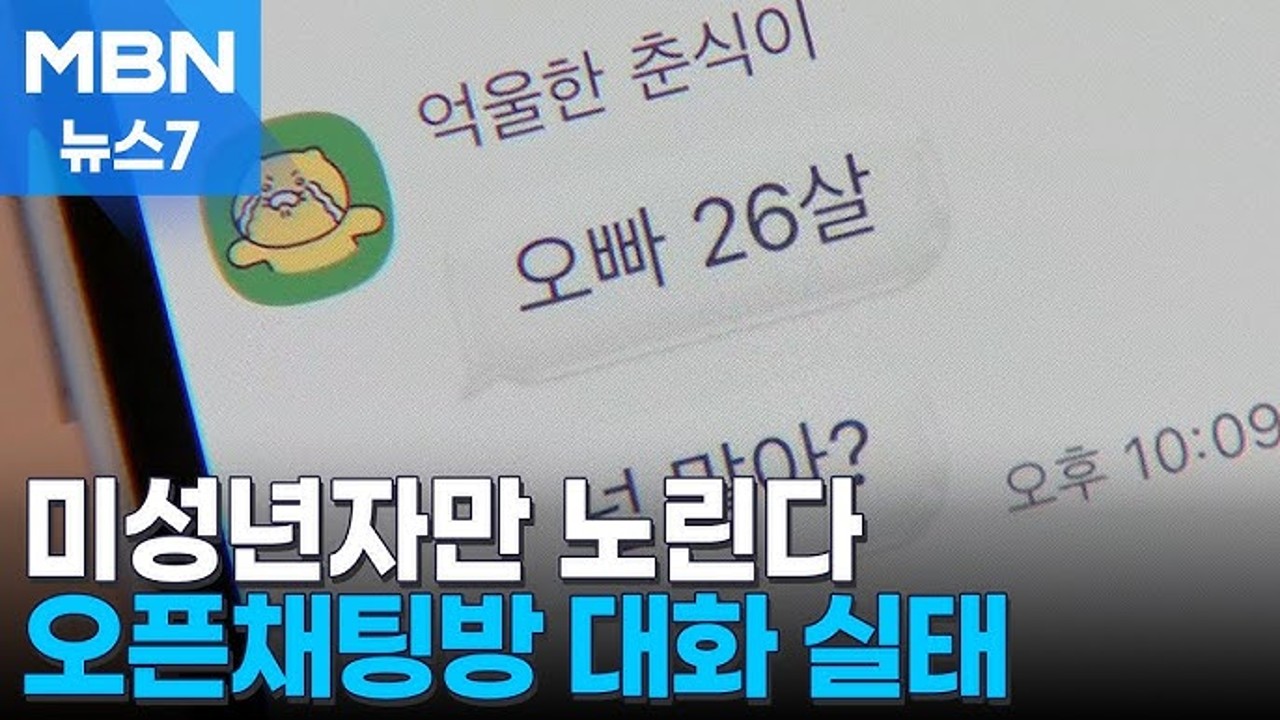
To put it simply, the act of having a conversation with a minor is not illegal in itself. South Korean law does not directly prohibit the format of "chatting." What the law scrutinizes is not the format of the conversation, but the content and purpose. While everyday conversation is not subject to punishment, the moment a sexual purpose is involved, it enters the realm of legal judgment.
Relevant Laws & Sources:
- Act on the Protection of Children and Juveniles against Sexual Abuse, Article 2 (Definitions)
- Commentary from the Ministry of Government Legislation
2. Issues with Sexual Expressions and Media Transmission
Transmitting words, photos, or videos that arouse sexual desire or cause humiliation is punishable, even in an online environment. A crucial point is that a crime can be established through chat alone, even without an actual physical meeting.
Specifically, the "Crime of Using Communication Media for Obscene Acts" (Article 245 of the Criminal Act) is judged based on whether obscene words or media were transmitted, regardless of whether the recipient was a minor. Therefore, even if you believed the other party was an adult, if the transmitted content is judged as obscene, the possibility of a crime remains open. Claiming you didn't know the person was a minor does not always exempt you from punishment, as certain regulations focus on the act itself rather than the perception of the recipient's age.
Relevant Laws & Sources:
- Criminal Act, Article 245 (Crime of Using Communication Media for Obscene Acts)
- Ministry of Government Legislation: Easy-to-understand Law Information
3. Repetitive Sexual Approaches and Online Grooming

Beyond one-time expressions, the act of building trust to continue sexual conversations or inducing meetings, filming, or moving to external messengers can be classified as online grooming. This was explicitly included as a punishable offense following the 2021 amendment.
Online grooming is a legal concept regulating sexual approaches toward children and juveniles. While the specific "grooming" clauses might not apply directly to relationships between adults, other criminal provisions may be triggered during the process of forcing repetitive sexual conversations or inducing filming/meetings:
- Persisting in unwanted sexual conversation → Coercion or Stalking
- Forcing filming → Coercion, Violation of the Act on Special Cases Concerning the Punishment, etc. of Sexual Crimes
- Repetitive transmission of obscene images → Crime of Using Communication Media for Obscene Acts
Relevant Laws & Sources:
4. When Chats Lead to Physical Meetings

If a chat leads to actual sexual contact and the other party is a minor under the age of 16—who is protected by law—it can be judged as a serious sex crime regardless of consent. In such cases, whether the chat came first or the offline meeting came first is not a key issue in legal judgment. The law judges based on the age of the victim and the actual sexual act that occurred rather than the circumstances of the encounter.
For example, if a user meets someone offline after exchanging sexual chats via a random chat service, only to find out later that the person was a minor under the age of statutory protection, the legal judgment does not change even if the minor acted like an adult or consented to the meeting. Courts prioritize the actual act and the age of the victim over the path taken to the encounter.
Relevant Laws & Sources:
- Criminal Act, Article 305 (Constructive Rape and Indecent Act with Minors)
- Supreme Court Precedent: Victim's consent is not a ground for justification of illegality.
5. Where Does diptok Stand in This Context?
As we have seen, the recurring problems involving minors in random chat are often more closely linked to the structural characteristics of the services than to the deviations of individual users. While anonymity, immediacy, and low entry barriers are clear advantages of random chat, they also increase the potential for legal disputes.
👉 diptok Blog — Analysis of Random Chat Scam Patterns and Guide for Safe Usage
In this climate, some services—including diptok—are redesigning their structures based on what to remove to ensure a safer random chat environment rather than just adding features.
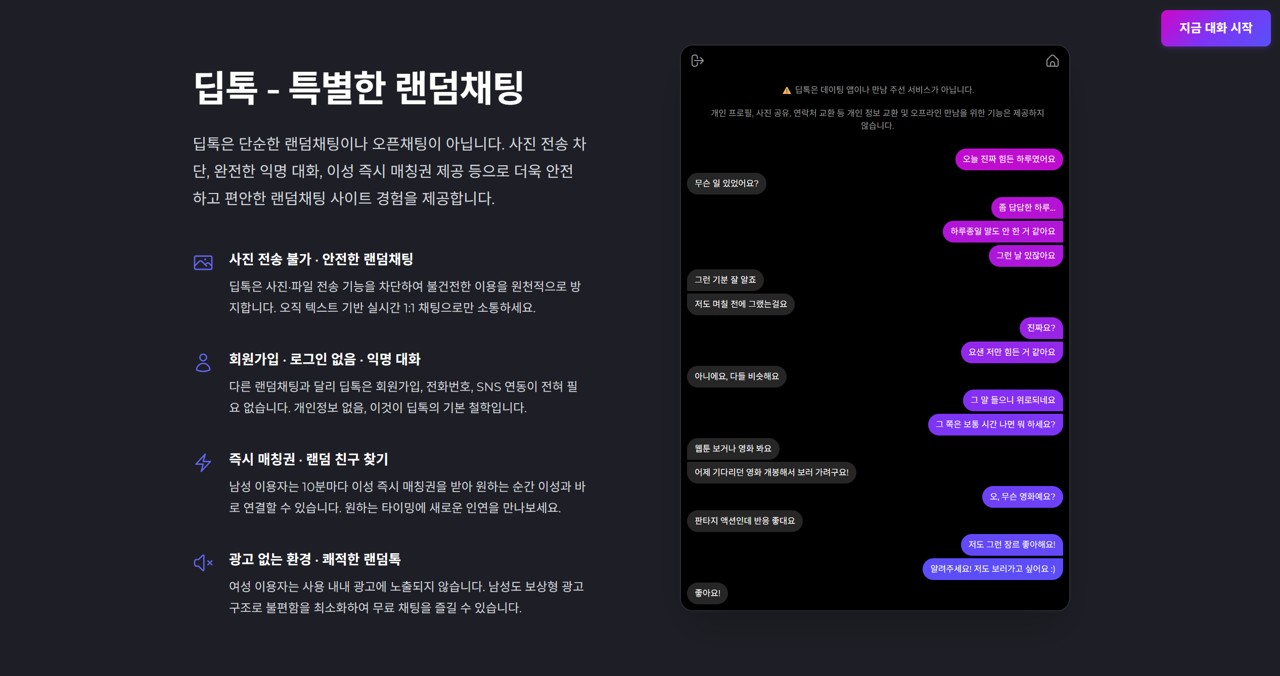
diptok chose a structure that provides only 1:1 text-based conversation without logins, profiles, or photo transmissions. This is not to exclude specific users or replace legal judgment, but rather a design direction to reduce the structural risks that have been repeatedly problematic in random chat environments. Specifically, since photo transmission and profile-based trust building have been pointed out as major causes of legal risk—as they increase the chance of misidentifying a partner's age or intent—diptok has strictly excluded them.
👉 diptok Blog — Update v2.3 - Introducing the Report Feature
The issue of random chat with minors is as much a matter of law and structure as it is a moral debate. While random chat itself is not illegal, legal liability can arise the moment sexual intent is involved. Users of random chat services should consider not only "which random chat" they are using, but also "how safe the random chat structure is."
Relevant Sources:
- Korea Citation Index (KCI): "Analysis of Online Obscenity Crime Routes Targeting Juveniles"
- Korea Communications Commission: "Guidelines for Management of Harmful Media for Juveniles"