
Random Chat diptok vs. Open Chat Comparative Analysis (2025)
How Big Tech and Startups Solve the Problems of Anonymous Chat Differently

Hello. I am Kim Jihoon, analyzing services based on data and structure. Today, I’ll be comparing KakaoTalk Open Chat, the most widely used anonymous chat in Korea, with the random chat service diptok. To get straight to the point: while both fall under the category of anonymous chat, their fundamental philosophies are entirely different.
Open Chat lets users choose who they want to meet, whereas diptok leaves that connection to a random matching system. KakaoTalk Open Chat can be summarized as: "Anonymous chat where you can sell a topic and reveal yourself." In contrast, diptok is summarized as: "Random chat designed to let you converse while staying hidden."
Today, I’ll discuss how these two distinct designs lead to very different outcomes. Before we begin, I also recommend checking out these other comparisons of diptok and other services:
👉 Random Chat diptok vs. Eoeca Comparative Analysis (2025)
👉 Random Chat diptok vs. Gagalive Comparative Analysis (2025)
Differences in Origin
KakaoTalk Open Chat
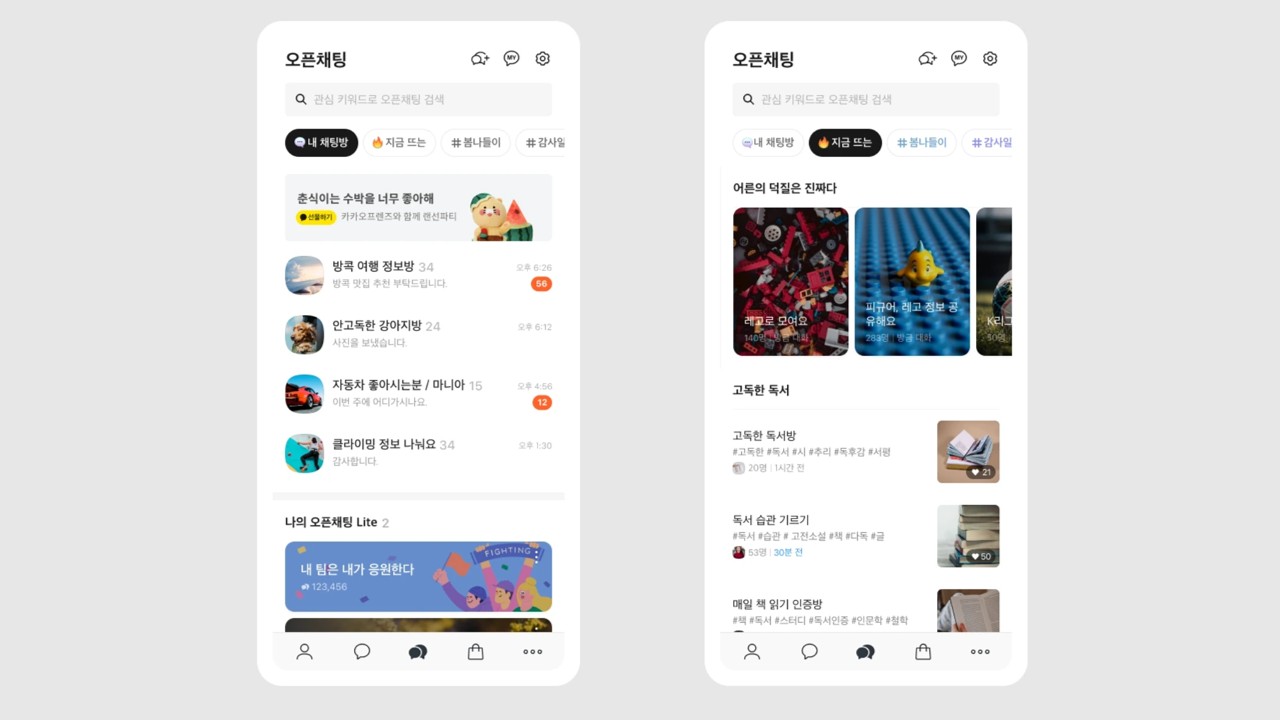
Open Chat is a feature built on top of the massive KakaoTalk messenger ecosystem. Its structure is very clear: there are rooms, room titles, and users manually choose whether to enter. While this structure is excellent for building communities, it is also a system that exposes all information. Keywords like "20s," "Adult," or "Born in '00" are visible to the outside, allowing users to connect with very specific intents using these indexed keywords.
Random Chat diptok
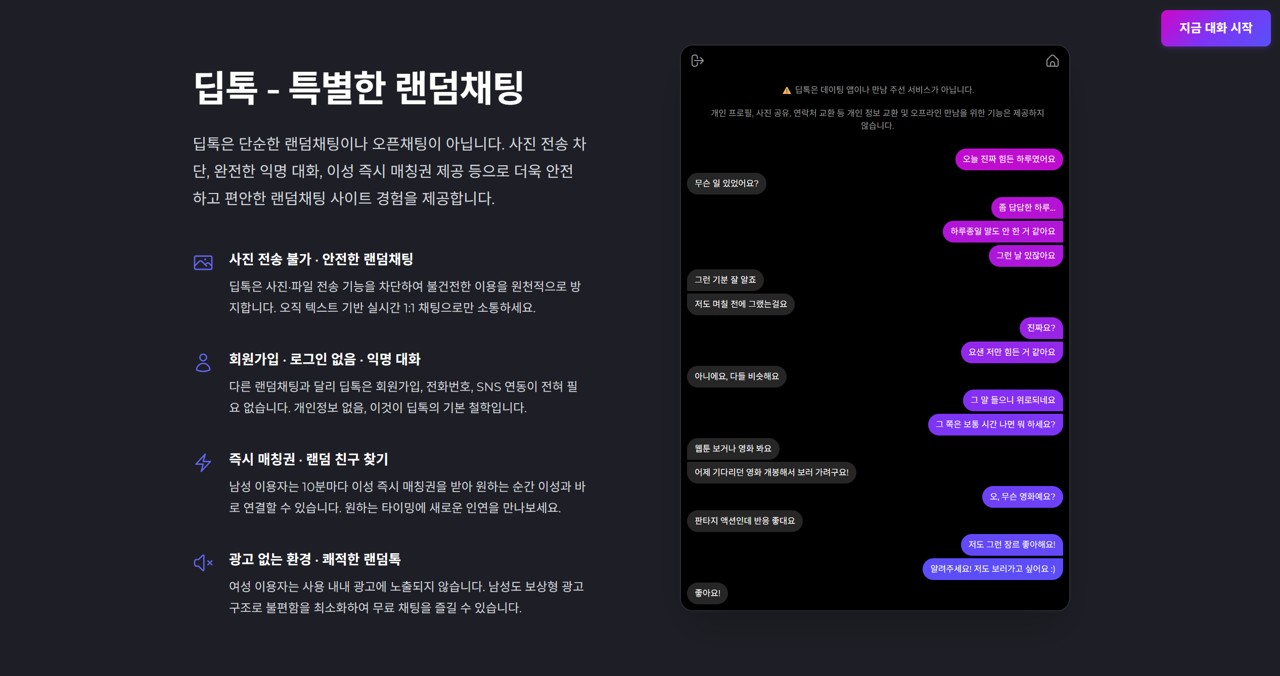
diptok was designed from the ground up on the premise of: "How can we create a safe random chat environment?" As a result, diptok has no rooms and no room titles; instead, chat rooms are assigned randomly. While some might find this inconvenient, it is a deliberate design choice.
Choosing a Topic (Open Chat) vs. No Topic Choice (diptok)
In Open Chat, users judge for themselves. They look at the room title, guess the atmosphere, and enter a place of their choosing. In this process, the intent of both the creator and the joiner is predefined. When intent is clearly defined, it also means someone can exploit that intent for malicious purposes.
Conversely, diptok does not give you that choice. You cannot pick your partner, you cannot know who they are in advance, and you are placed in a random room. No intent can be broadcasted beforehand. Therefore, no one can target or approach a specific individual with (impure) intentions.
Risk is a Matter of Structure, Not Management

There are recurring issues often associated with Open Chat:
- Solicitations and prostitution
- Exposure of teenagers and minors
- Online grooming crimes
Analyzing these solely as "poor management" is only half the story. These are inevitable risks inherent in the structure itself: a system where topics are exposed, people describe themselves through photos and nicknames, and anyone can connect. Anyone could easily predict that incidents might occur in such an open structure.
How diptok Responds to Random Chat Scams
Instead of reactive measures after a problem occurs, diptok created a structure where it is difficult for incidents to happen in the first place. We don't assume that every user on diptok is a "good person." Rather than relying on a belief in human goodness, we designed the system so that even if a "bad person" joins, they cannot easily cause harm. To achieve this, diptok made the following choices:
- A structure where specific ages or genders cannot be targeted
- A structure where intent cannot be conveyed through topics
- A structure that blocks approaches mediated by photos
Risks and Incidents Created by Photo-Based Profiles

Currently, most chat services, including Open Chat, provide profile pictures as a default option. This has clear advantages: you can show off your appearance, lower the barrier to conversation, and build intimacy quickly. However, this structure simultaneously carries clear risks:
- Romance scams using attractive female photos as bait
- Identity theft crimes using others' photos
- Trust issues where it’s impossible to verify if the person is real
In particular, a "pretty female profile" serves as an easy starting point for a chat, but it also becomes the most powerful entry tool for romance scammers.
Why diptok Does Not Have a Photo Feature
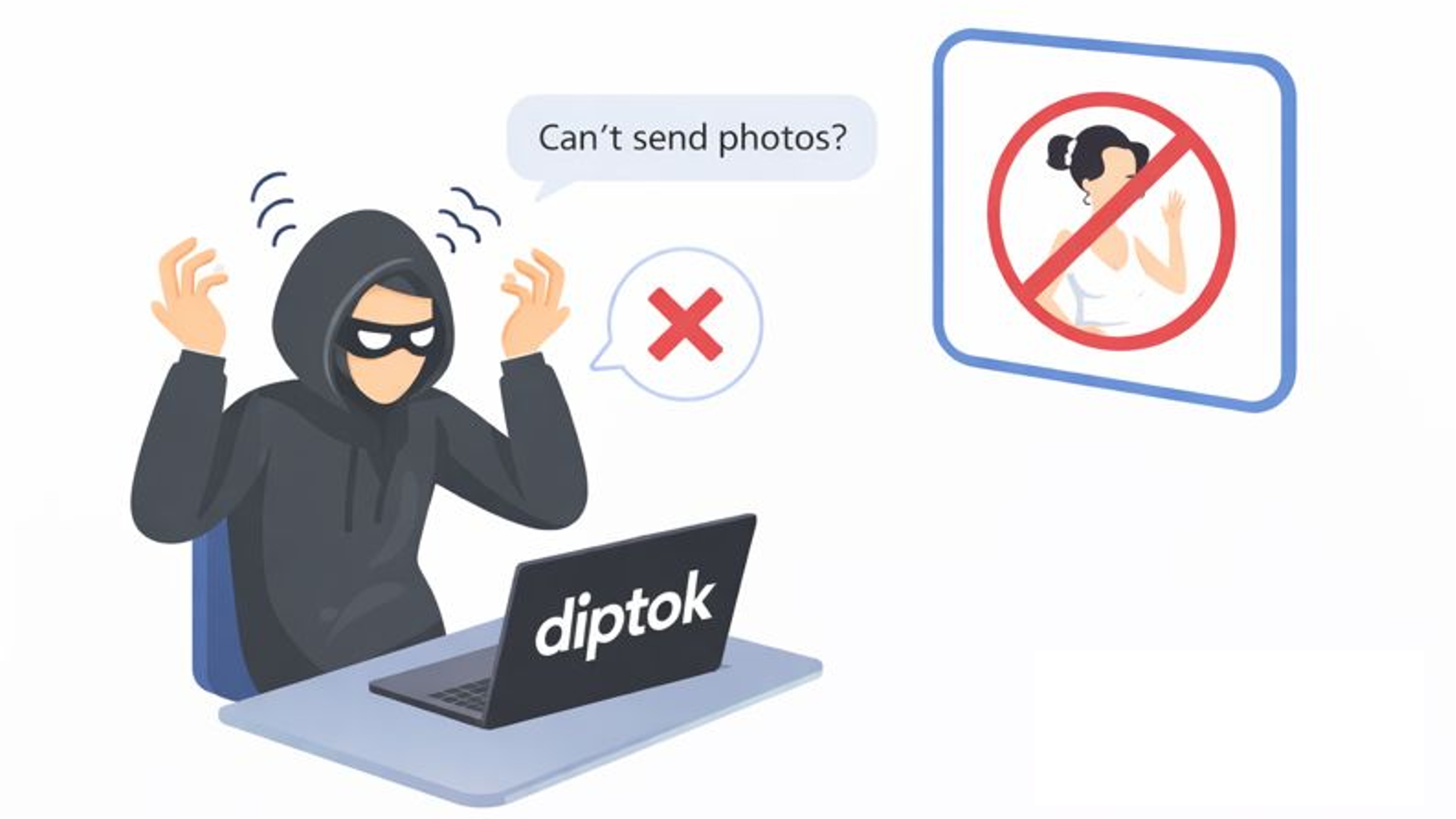
diptok does not include a profile picture feature, nor does it allow sending photos during a chat. This is an intentional decision. We believe that meaningful connections are possible through text alone. We wanted to fundamentally eliminate the trust issues that arise the moment a photo is involved and increase the "entry cost" for crimes like romance scams and photo theft.
From a scammer's perspective, diptok is a very unattractive service. It’s hard to build trust using photos, difficult to plan grooming crimes by picking a specific target, and thus takes a very long time to achieve financial goals based on intimacy. For a scammer, there are many other platforms far more efficient than diptok.
Differences in Operational Philosophy
Open Chat says: "We create regulations and sanction those who break them."
diptok thinks: "We create a structure where it is inherently difficult to break the rules."
Neither is necessarily the single "correct" answer. However, from the perspective of protecting minors, they are clearly taking different paths.
Closing Thoughts
KakaoTalk Open Chat is undeniably a great service. it’s an attractive channel for people who want to communicate about specific topics.
Open Chat and diptok. Though they share the "anonymous chat" category, one centers on freedom while the other centers on user protection. diptok is not trying to replace Open Chat. Rather, it is an attempt to solve the problems that Open Chat structurally struggles with, using the simplest and most powerful methods possible.